
Services
Dental Veneers | Porcelain Veneers Perth
What Are Porcelain Dental Veneers?
Dental veneers are thin, custom‑made restorations made from materials such as porcelain or composite resin. They are bonded to the front surface of teeth and may be considered in situations where a dentist determines they are clinically appropriate based on tooth structure, gum health and functional requirements.
Veneers may be discussed as one of several treatment options during a consultation. The decision to use veneers depends on factors such as enamel thickness, bite relationships, existing restorations and the overall condition of the teeth and gums. A dentist will assess these factors to determine whether veneers are suitable.
Veneers are not appropriate for everyone. Experiences with recovery, maintenance and longevity vary between individuals due to differences in oral health, habits and biological factors. A consultation allows your practitioner to outline the potential risks, limitations and alternative treatment options relevant to your circumstances.
At SmileOnPerth, a consultation appointment provides general information about available treatment pathways. This appointment does not include a full dental examination, X‑rays, 3D scans or clinical treatment. A separate comprehensive examination is required to assess suitability for any dental procedure.
Is Veneer Treatment Appropriate for You?
Veneers may be considered in certain clinical situations; however, they are not suitable for every individual. Suitability depends on factors such as oral health, enamel thickness, bite function and the condition of the underlying tooth structure. A dentist will assess these factors to determine whether veneers are an appropriate option.
Some clinical findings may influence whether veneers are recommended. These may include:
-
the presence of untreated dental disease
-
insufficient enamel for veneer placement
-
clenching or grinding habits
-
functional or bite‑related considerations
-
situations where alternative treatments may be more appropriate
A comprehensive clinical assessment with Dr Hau Yan Chan (DEN0002070946), Registered Dentist – General Registration is required before any treatment planning. This assessment allows the practitioner to evaluate your oral health, outline potential risks and limitations, and discuss alternative treatment options where relevant.
If issues such as gum disease, decay, bite discrepancies or weakened enamel are identified, these will be addressed first. Ensuring that the teeth and gums are in a stable condition is an important part of determining whether veneers are clinically appropriate.
01
Consultation & Clinical Assessment For Dental Veneers
Dr Hau Yan Chan conducts a comprehensive examination of your teeth, gums, bite, and overall oral health. The clinical assessment determines whether porcelain veneers are an appropriate option for your individual circumstances. Not all patients examined at this stage will proceed to treatment.
02
3D Scan, Tooth Preparation, Smile Design
The front surface of each tooth to be veneered may be reduced to create space for the porcelain veneers. Local anaesthesia is administered. Digital or physical impressions are taken and sent to a dental laboratory. Temporary coverings may be placed during fabrication.
03
Veneer Placement
After the veneer design is approved by our patients, our lab technicians will start the production of the veneers. After the custom-fabricated porcelain veneers are assessed for fit and appearance, they will be bonded to the prepared teeth using dental adhesive. Adjustments are made as clinically indicated. Post-placement care instructions are provided.
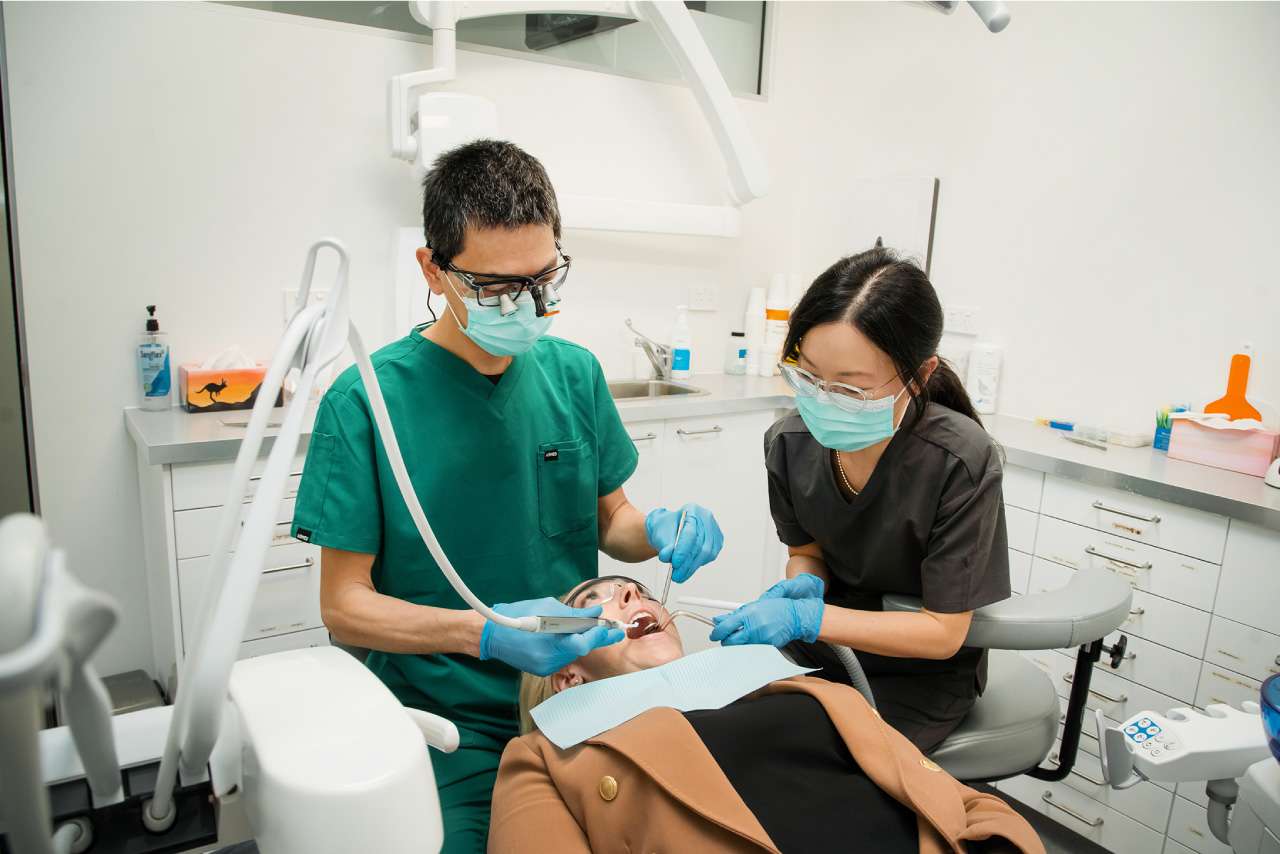
Before the porcelain dental veneers are ready
Temporary Veneers During the Waiting Period
Following tooth preparation (the second appointment), the natural teeth may have been reduced to accommodate the final porcelain veneers. During the period while the laboratory fabricates the final restorations — which typically takes a number of days to three weeks depending on the laboratory and clinical requirements — temporary veneers are placed over the prepared teeth.
Temporary veneers are provisional restorations and are not fabricated from the same materials as the final porcelain veneers. They serve a protective and aesthetic function during the waiting period.
Patients should be aware of the following regarding temporary veneers:
- Protective Function
Temporary veneers cover the prepared tooth surfaces, protecting the exposed dentine from temperature changes and physical contact during the laboratory period.
- Aesthetic Provisional
Temporary veneers provide a provisional appearance while the final restorations are being fabricated. Their appearance will differ from the final porcelain veneers.
- Fragility
Temporary veneers are not as durable as final porcelain restorations. They are more susceptible to fracture, dislodgement, and staining. Patients should avoid hard, crunchy, or sticky foods during this period.
- Sensitivity
Some patients experience heightened sensitivity to temperature during the temporary veneer phase, as the dentine beneath the temporary material may be more reactive than it will be once the final veneers are bonded.
- If a Temporary Dislodges
If a temporary veneer becomes dislodged or fractures, patients should contact the practice promptly. Leaving a prepared tooth unprotected for an extended period can cause sensitivity and clinical complications.
Get In Touch With Us
Call us
0406 403 821
Email us
smile@smileonperth.com.au
Contact Us